A Song From My Childhood
The Sugababes' Three album was the first album I bought with my own pocket money, and I loved it with all my heart. I (over)played it almost every day, literally sitting by the stereo listening to it. Million Different Ways was definitely my favourite on the album, and I remember choreographing a little dance routine to it. I sang and danced to the song alone, not really wanting to show anyone the routine.
A Song From My Early Teens
Justin Timberlake's What Goes Around... Comes Around, as well as some of his other songs (Lovestoned/ I Think She Knows) were particular favourites of mine because they broke the standard mould of the 3-4 minute song in mainstream music. Timberlake's songs were, and still are, significantly longer than the average song, and I liked the progression through different keys, music styles and melodies in his music.
A Song That I Like Now
Home by Philip Philips was used consistently in advertising promoting the Fierce Five, a group of Olympic gymnasts that I'm really inspired by and appreciative of. The lyrics tell the story of uncertainty and stepping on unfamiliar ground and not knowing where you are headed, but in the end, finding a place to call home somewhere else in the world, which is definitely relevant now that we have a lot of fairly intimidating changes to await. It's also a song that just really gives me the confidence to push forward and not hold back because I now recognise the importance of taking chances.
Sunday, September 8, 2013

Music Video Track Research
As a group, we had already decided that we wanted to go for either a retro/ old-school theme or a cutesy, girly music video, and so I researched tracks that had this kind of theme, as well as artists that fitted the stereotype of the strong, independent girl.
Here is my original track list:
For this particular song, I think shooting outdoors in various settings would be appropriate, in order to coincide with the notion of freedom that is expressed in the lyrics. Props such as brightly coloured balloons and bubble blowers also fit strongly with this theme.
#


3) Way To The Future - Katie Herzig
My idea for Way To The Future is not too dissimilar from my idea for He Wasn't There, sticking to the old-school theme that our group has decided would be best. However, since the lyrics in Herzig's song narrate a very different story to those in Lily Allen's, the artist identity may be very different. The story in Way To The Future is very much about a girl's shyness in expressing her love, and playing on this idea, I considered working around a nerdy artist identity and a high-school romance sub-theme.
The performance would, again, be in a classic, staged setting, with monochrome colouring, but instead of backing singers, there would be a band and instruments.
On the other hand, the narrative element would take place in the girl's bedroom, which we would have to make both conventionally girly and geeky, with a mixture of pinks and purples and objects such as old books and a globe. We could also have the love interest's bedroom portrayed in the narrative, shown when he receives '... her words, out of the sky.'


Here is my original track list:
Boyz - M.I.A
Knock ‘Em
Out - Lily Allen
What I
Wouldn’t Do - A Fine Frenzy
Blow Away -
A Fine Frenzy
Fluorescent
Adolescent - Kate Nash
Do Wah Do -
Kate Nash
Mouthwash-
Kate Nash
Paris - Kate
Nash
Pumpkin Soup
- Kate Nash
Merry Happy
- Kate Nash
Kiss With A
Fist - Florence & The Machine
Skeleton
Song - Kate Nash
He Wasn’t
There - Lily Allen
Sailing
Song- A Fine Frenzy
It’s Alive-
A Fine Frenzy
When You
Grow Up - Priscilla Ann
I Will Get
Over You - Priscilla Ann
Way To The
Future - Katie Herzig
The Only
Place - Best Coast
I then narrowed down these tracks to my favourite three that I thought would be most appropriate for the brief and for our chosen retro theme. I removed those that were too long, those that would be difficult to perform and sing, and those that were not very upbeat, because they would also be very difficult to perform to.
1) Blow Away - A Fine Frenzy
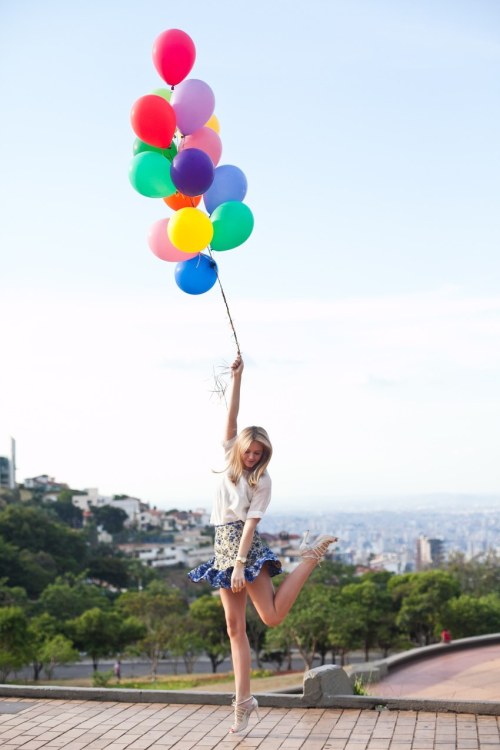
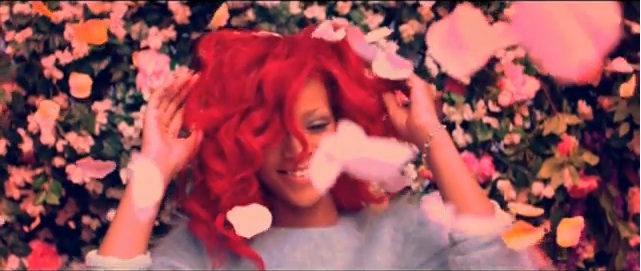
This song is very upbeat and therefore lends itself well as a memorable debut track for a female individual artist or band. My idea for Blow Away was very closely related to the analysis I did of Electric Twist, also by A Fine Frenzy, which relied heavily on a theme of innocence and childhood.For this particular song, I think shooting outdoors in various settings would be appropriate, in order to coincide with the notion of freedom that is expressed in the lyrics. Props such as brightly coloured balloons and bubble blowers also fit strongly with this theme.
#
Visual References


2) He Wasn't There - Lily Allen
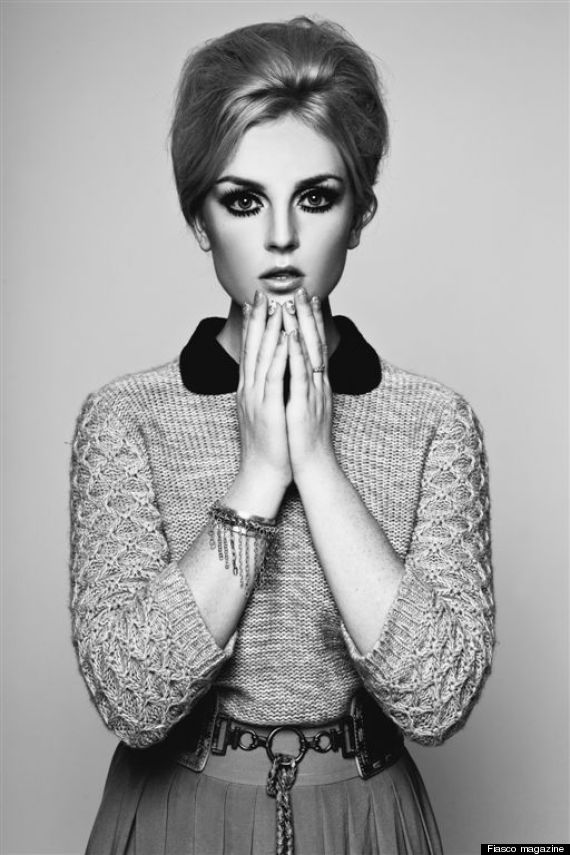
He Wasn't There fits very well with the retro theme that we had in mind, whilst till leaving room for use of contemporary technology.
Conventionally, old-school songs are performed on stage, which is what I had in mind for the performance aspect of this music video - the lead singer would be accompanied by backing singers and a vintage microphone on stand, in a minimalistic, staged setting.
The narrative element would be a constructed garden-style setting in a studio with a bench, and flowers/ small birds made out of paper to provide a kind of fun-loving aspect to the music video. The narrative would feature the blossoming of the relationship between the lead singer and her male partner, and the stages would be depicted whilst they sat on a white garden bench.
Visual References


3) Way To The Future - Katie Herzig
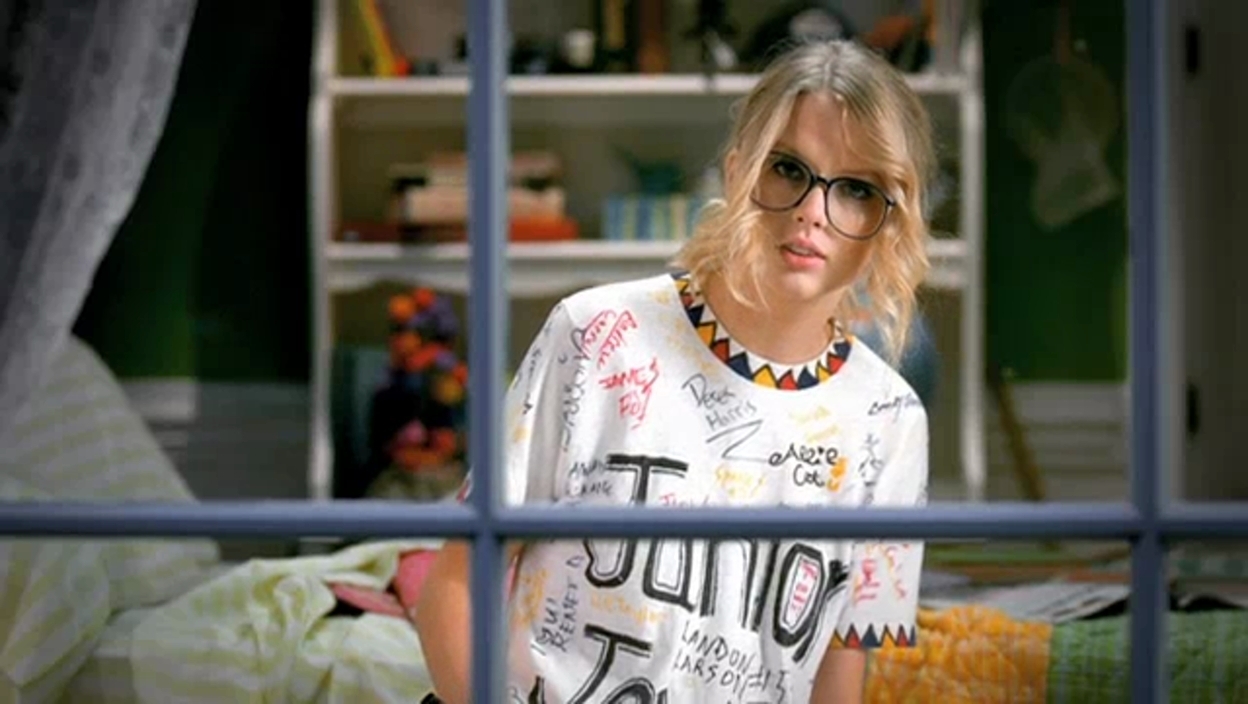
My idea for Way To The Future is not too dissimilar from my idea for He Wasn't There, sticking to the old-school theme that our group has decided would be best. However, since the lyrics in Herzig's song narrate a very different story to those in Lily Allen's, the artist identity may be very different. The story in Way To The Future is very much about a girl's shyness in expressing her love, and playing on this idea, I considered working around a nerdy artist identity and a high-school romance sub-theme.
The performance would, again, be in a classic, staged setting, with monochrome colouring, but instead of backing singers, there would be a band and instruments.
On the other hand, the narrative element would take place in the girl's bedroom, which we would have to make both conventionally girly and geeky, with a mixture of pinks and purples and objects such as old books and a globe. We could also have the love interest's bedroom portrayed in the narrative, shown when he receives '... her words, out of the sky.'
Visual References


Monday, July 22, 2013
Prelim Evaluation
1)
Did you enjoy the workshop day? What were your best
bits and why?
 I thoroughly
enjoyed the music video workshop on Friday 12th June, for various reasons. The first was the experience of a
professional shoot, alongside people who had previous experience in the media
industry. Being able to work with professionals, and to a shoot schedule, was
really beneficial in terms of deciding whether or not we would like to continue
working in this field in the future - although testing, the day was very rewarding,
and I would definitely like to pursue this as a career in the future.
I thoroughly
enjoyed the music video workshop on Friday 12th June, for various reasons. The first was the experience of a
professional shoot, alongside people who had previous experience in the media
industry. Being able to work with professionals, and to a shoot schedule, was
really beneficial in terms of deciding whether or not we would like to continue
working in this field in the future - although testing, the day was very rewarding,
and I would definitely like to pursue this as a career in the future.
The
second aspect I believe was genuinely beneficial was the emphasis on performance, because as
media students, the technical aspect of the music video usually overrides
performance, although they are both equally important in this particular form
of marketing. Although some of us would have known how to dance before, being able to perform in front of a camera was definitely a new and invaluable skill that I acquired during the workshop. The performance was testing but extremely amusing and I am
really excited to incorporate my new-found knowledge of performance into my own
music video next year!
In hindsight however, I would've liked to have gotten involved with the cinematography side of things - I helped a little when making Jade's bow set, but I would've also liked to have helped with other sets, such as the grunge.
In hindsight however, I would've liked to have gotten involved with the cinematography side of things - I helped a little when making Jade's bow set, but I would've also liked to have helped with other sets, such as the grunge.
2)
What have you learnt from participating in each of the
prelim tasks?

Secondly, the audition video, as well as performance rehearsals and highlighted the importance of performance, in a music video, as well as having fun. On the other hand, arrangements for costume also accentuated the importance of establishing character/ brand of each of the members of a band, and making them individual by giving them all personalities.
As well as being given the chance to perform on the workshop day, I also learnt about the importance of allocating roles with a team and working according to a shoot schedule- I was, for example, a dance double, and my specific job was to make sure all of Leigh-Anne’s moves were performed during filming.
The editing stage, both of the audition tape and of the workshop have made clear how intricate, and often time-consuming, sound/vision editing can be. We worked with Radial Blur and split-screens, two effects that we may consider incorporating into our own music videos next year.
3)
Are you pleased with the footage and your edit? Is
this how you expected it to look?
 The footage has
a really professional element to it, and I think this is largely down to
allocating roles to people in the large team that was involved in the shoot-
for example, we had separate groups of people working on lighting, camera, set
design and choreography, and together, we managed to produce footage that was
of a very high standard. I am also pleased with our final edit- as per the brief, it reflects the original music video for 'Wings', but where we did not have appropriate footage that could be used in the final edit, we used other shots and therefore added some originality to the final cut. For example, if the band members were not lipsynching during a particular shot, we added shots of the dance crew instead.
The footage has
a really professional element to it, and I think this is largely down to
allocating roles to people in the large team that was involved in the shoot-
for example, we had separate groups of people working on lighting, camera, set
design and choreography, and together, we managed to produce footage that was
of a very high standard. I am also pleased with our final edit- as per the brief, it reflects the original music video for 'Wings', but where we did not have appropriate footage that could be used in the final edit, we used other shots and therefore added some originality to the final cut. For example, if the band members were not lipsynching during a particular shot, we added shots of the dance crew instead.
4)
How do you think your prelim experiences will impact
on your approach to next term’s music video coursework?
 Firstly,
through the various prelim tasks, I have realised the importance of
pre-production and planning for the music video task. Not only will the cinematography and lighting in every shot
and set up have to be planned to perfection, but sets and costumes will also
need to be ready prior to the shoot, and the performers should have been
regularly rehearsing, so that they feel comfortable on the day.
Firstly,
through the various prelim tasks, I have realised the importance of
pre-production and planning for the music video task. Not only will the cinematography and lighting in every shot
and set up have to be planned to perfection, but sets and costumes will also
need to be ready prior to the shoot, and the performers should have been
regularly rehearsing, so that they feel comfortable on the day.
Another aspect
of the prelims we will be sure to remember is the importance of performance in
the music video. On the Little Mix shoot, Iwas a dance double for Anjana, who played Leigh-Anne,- my task was both to motivate her and teach her the specific dance
moves, which helped us achieve all the necessary footage. Therefore, whilst
there will be people focusing on the technical aspects, such as camera and
lighting, I would like to also have group members working with the performers,
on choreography and lip synching. Also, Anjana and I made sure we managed our time between us, so that I was on set with her when she needed me, and could do my own hair and make-up in between.
Finally, on
shoot days that can often be fairly long and tiring, the importance of a shoot
schedule is paramount, as it will help the team to stay motivated and
organised, as well as everybody remaining on task and being able to communicate
effectively.
Tuesday, June 18, 2013
Music Video Analysis- 'Electric Twist' by A Fine Frenzy
I chose to analyse the music video for 'Electric Twist' by A Fine Frenzy according to the conventions of a performance music video.
1. The music, lyrics and imagery work in collaboration: This is present in this particular music video, as there is clear sound-vision editing. The lyrics also occasionally work with the imagery, especially with the telephone to match the '... thanks for the call' lyric. Some of the dance moves also echo the lyrics, such as the twisting move that accompanies the chorus and the 'Don't talk' action.
2. The performance drives the music video and is sustained throughout: Alison Sudol, the lead singer, continues to sing throughout the video, directly addressing the camera, and the other members of the band make an appearance when the beat picks up, playing their respective instruments. However, there are also both narrative and conceptual elements; the lyrics tell the story of a bittersweet love, which provides the narrative aspect, whilst the theme of childhood (toys, paint, goldfish, building blocks) creates the concept of young, and perhaps immature love.
3. The artist sings/ mimes throughout: Alison sings throughout the music video, and the lip-syncing is believable.
4. The role of the artist may switch between artist performance and artist-in-character performance: As well as singing, we see Alison in several roles that connote naivety. We see her appearing to be wooed by a potential love interest, who gives her a goldfish, which directly relates to the bittersweet nature of the lyrics of Electric Twist. We also see her dancing with a pregnant woman and messing around in paint, both of which are fairly immature actions and therefore accentuate the kooky brand associated with A Fine Frenzy.
5. The audience will expect to see singing/ dancing/ movement/ playing instruments: Aside from Alison singing, there is also some dancing, which often matches the lyrics (for example, with the words 'don't talk' and 'twist'). The dance moves are quite quirky, which conform to the expectations of the alternative genre and also fit with the brand image. Other band members, with guitars and a drum kit, appear when the beat picks up in the middle and at the end of the video.
6. The artist performance will be engaging/ impactful/ visually striking: The engagement in this particular video comes from the construction of the brand identity through the use of costume and props; her laid-back costume work in conjunction with the props, particularly the toys, to create an impactful image. The development of the love story in the lyrics, along with the development of the band relationships up to the end of the video, are both fun and aspirational, and therefore engaging.
7. The video features a highly stylised variety of costume, hair, make-up, backdrops and effects: Throughout the video, Alison changes outfits various times, from a stylish, canary yellow dress for her 'date' set, to dungarees, big t-shirts, tights and boots in other sets. Her make up and hair are fairly natural in all the sets. The costume, hair and make-up are all stylised in a way that allows the quirky aspect of the artist to shine, and the natural hair and make-up could emphasise the theme of naivety. The sets are quite plain, but well lit, and often feature props such as a bench or a window. The effects on the video, including the border around it and the occasional split screen also add to the playful mise-en-scene.
8. A strong sense of development is expected: The development in this video comes primarily from the appearance of the other band members when the beat picks up. The addition of the paint at the end, when the band are with their instruments, also allows the viewer to see the relationships between band members through their childish of fun.
9. A strong sense of artist identity is crucial and must be aspirational to fans: The elements of costume, dancing and visual effects are used together to construct a brand identity that suggests that A Fine Frenzy is cute, kooky and alternative. For example, the dance moves are quite easy to replicate, especially the twist, the marching and the hair whips. The sets that feature the baby, the 'date' and the pregnant woman are also very cute and convey innocence, whilst the costumes, particularly the dungarees and t-shirts, move away from the sexualised female figure of mainstream music, which may make A Fine Frenzy more aspirational to young girls and women.
10. Beauty shots/ money shots are expected: The close-ups of Alison's face throughout the video are softly lit to accentuate her unique look and auburn hair. Furthermore, the set up in which she wears the yellow dress could be said to be a beauty shot as she is closer to conventional, feminine glamour here rather than in her dungarees/ T-shirts.
11. Extreme juxtapositions and binary opposites make the video interesting: There is a clear juxtaposition between the props used in the video, particularly the various toys, and the adults who feature in the video, as the toys act as signifiers of childishness and innocence.
12. Discontinuous editing is standard: Discontinuous editing is used throughout, with the video swapping regularly between the various set-ups, in order to create interest and develop the music video.
13. The audience will gain pleasure from references to popular culture: There are conventional symbols of childhood throughout the video, including the building blocks, the vintage-looking puppets, the animal toys and the hula hoop, all of which connote carefree fun, whilst the goldfish is also a symbol of childish love.
14. The video will be polysemic in nature, offering different layers of meaning: The lyrics tell the story of a bittersweet love and consequent indecisiveness, and whilst the toys could symbolise childhood and innocence, they could also imply that the love interest is not 'wild' and carefree enough.
15. It is likely to provoke a strong audience reaction: In my opinion, this video could be enjoyed by people of all ages, especially due to the easy dance moves and memorable lyrics. The market for teenage girls is probably most likely to be attracted to this kind of video, as some will aspire to be like Alison, whilst others may appreciate the way in which the character is not sexualised, as many females are in the music industry nowadays.
Friday, November 9, 2012
Reservoir Dogs Title Sequence Remake
Here is a remake of the Reservoir Dogs Title Sequence that we shot and edited this week. I edited with Emily, and this is the final outcome. I hope you enjoy it!
Thursday, October 25, 2012
Dexter Title Sequence Re-edit (DYM)
Our task was to re-edit the Dexter opening sequence. Watch ours here!
1. Summarise the conventions of title sequences that were most important to this task.
1. Summarise the conventions of title sequences that were most important to this task.
- A consistent font and colour scheme to establish a brand for the show.
- Legal requirements, such as names of the main cast, directors and producers.
- Should be reflective of the genre of the show- in this case
- We made a list of names and roles that we would typically see in an opening sequence of a drama, such as an executive producer, a director and the names of the main members of the cast.
- We also tried to synchronise the titles with significant moments of the visuals of the opening sequence. For example, we had two cast names appear when the blood dropped into the sink.
- The typeface we used was quite plain so that the titles would be legible, but still reflective of the horror/mystery genre.
- We wanted to follow the convention of having a consistent font and colouring in order to brand Dexter, but we also used various effects on our titles so that they could work harmoniously with the visuals.
- Our re-edit was perhaps not conventional of the genre in the sense that we used a variety of effects on the titles, whereas usually, the titles would all appear on the screen in the same way, regardless of the visuals. This is to maintain simplicity and not detract attention from the visuals and from the importance of the titles.
Prelim Evaluation (BLK)
EVALUATION
PLANNING SHOOTING EDITING
1. Who did you work with and how did you
manage the task between you?
·
Group members- Emily and Raagavi
·
Planning- we worked together on the planning
processes (brainstorming, scripting and storyboarding) so that everybody could
pitch ideas about our short storyline and how we should shoot it
·
Shooting- We all wanted to shoot at least two
shots so we tried to arrange it so that the people who weren’t acting in
certain shots could shoot. Raagavi shot all the shots with both me and Emily in
them, Emily shot the ones featuring me and vice versa
·
Editing- we alternated who was working on the
editing at regular intervals so that everybody had a chance to work with and
get used to the software.

2. How did you plan your sequence? What
processes did you use? What theories did you try to take into account?
·
The main purpose of this task was to create a
sequence using continuity principles. We worked so that an establishing/master
shot, shot-reverse-shot, match on action, and the 180 degree rule were all
included in our sequence.
·
We started off by brainstorming ideas- we
initially had two ideas, one featuring somebody being followed and another
about a conversation with a mysterious person whose face is never revealed. Unable
to choose between the two, we ended up combining both ideas into our current
idea of Faceless.
·
We then made a shot list, script and storyboard
to identify continuity principles that we had to use and how we would add them
in seamlessly, and how we would tell our story
·
The shot list was then translated into a shoot
schedule to make the shooting process more efficient, as we could shoot
according to the various set-ups we needed
·
We thought it would be convenient to rehearse
the sequence in our desired location (long brick wall) prior to the shoot, in
order to check that the timing would be correct. During the rehearsal, we also
took into account the position of the camera in each shot, and character
placing in the frame

3. What technology did you use to complete the
task, and how did you use it?
·
Shooting- A Canon DV30 video camera was used on
the day of the shoot, along with a tripod, which we made us of on all of the
shots but one- this was the shot where the protagonist/victim starts running
away from the follower, and the use of the handheld shot accentuates the
disorientation, confusion and terror going through the character’s mind.
·
Editing- Adobe Premier Pro was used to edit our
sequence. We started off making a rough cut by sequencing, cutting and pasting
clips in a desirable order. We then cut each shot down further so that it
lasted for a reasonable amount of time and also followed continuity principles
such as match on action.
4. What factors did you have to take into
account when planning, shooting and editing?
·
Planning- we had to take into account everything
that we had learnt about cinematography, and therefore had to make decisions
about point of view/perspective an also about where we could use camera
movement and where the camera would remain static in order to put across a
certain mise-en-scene. We also had to take into account continuity principles
(establishing shot, shot reverse shot, 180 degree rule, and match on action)
and how we would shoot and edit these. One other factor was how we would
distinguish our characters from one another and how we would communicate their
relationship through framing and camera work- we decided that character
positioning, such as that in the first shot, was extremely significant to show
them in relation to the space and each other.


5. How successful was your sequence? Please
identify what worked well and in hindsight, what would you improve/do
differently?
·
I was really happy with our idea as I thought it
was both intriguing to watch and challenging to edit, due to the various
matches on action. Furthermore, we took audience involvement into account by
using over the shoulder shots and an appropriate shot order to bring them into the action. I
also feel we worked very well as a team on the day of the shoot as we had to
change our shoot schedule to increase practicality. In terms of the final cut,
we were pleased with how we edited the matches on action as they looked fairly
seamless. Also, the genre of mystery/thriller was established well through the
pace and rhythm of the sequence.
·
One thing we had to amend when editing was the
running sequence. We originally had three shots of the protagonist running from
different angles before she reached the door. However, we had to delete the
last of the three, which was a static camera shot of her running towards the
door, as it was not continuous and was slightly disorientating.
6. What have you learnt from completing this
task? Looking ahead, how will this learning be significant when completing the
rest of your foundation course?
·
We learnt about the process of taking an idea
for a sequence and processing it into an actual film, through the stages of
planning, shooting and editing.
·
We finally got to put the continuity principles we
were learning about into action, as we were given a chance to plan, shoot and
edit a sequence in which we always had to consider how to establish continuity.
I think this will be relevant in all future film-making, and in the short-term,
our film opening sequences.
Subscribe to:
Posts (Atom)